When selecting a mold remediation company in Florida after flooding or water damage, verify that the contractor holds an active state mold remediator license and carries appropriate pollution liability insurance. Under Florida law (Section 468.8419), the company that performs your mold remediation cannot also perform the mold assessment or post-remediation clearance testing on the same property.
Understanding Florida’s Mold Laws: Assessor vs. Remediator
Florida maintains strict consumer protection laws regarding mold services. Under Florida Statute Title XXXII, Chapter 468, mold assessment and mold remediation are legally separated. A single company or individual is prohibited from performing both mold assessment (testing and inspection) and mold remediation (removal and cleanup) on the same property within a 12-month period, with limited exceptions such as certain licensed contractors working on their own projects. Check the statute or ask the DBPR if you are unsure whether an exception applies.
This separation exists to protect property owners from conflicts of interest. An independent mold assessor inspects the property, determines the extent of the damage, and writes a formal remediation protocol. The mold remediation company then executes that protocol. Once the remediation is finished, the original assessor—or another third-party licensed assessor—returns to perform post-remediation verification (clearance testing) to confirm the indoor environment has returned to normal fungal ecology.
Key Factors When Evaluating a Remediation Contractor
In South Florida, the humid climate and frequent tropical storms create ideal conditions for rapid fungal growth following pipe bursts, roof leaks, or flood events. When vetting a remediation professional, focus on the following qualifications:
- Active State Licensing: Ensure the contractor holds a current Mold-Related Services Remediator (MRSR) license issued by the Florida Department of Business and Professional Regulation (DBPR). You can verify license status directly on the DBPR portal.
- Comprehensive Insurance Coverage: General liability insurance often excludes mold and pollution. Confirm that the contractor carries dedicated pollution liability and workers’ compensation coverage.
- Adherence to Industry Standards: Professional remediators follow established industry standards, such as the Institute of Inspection, Cleaning and Restoration Certification (IICRC) S520 Standard for Professional Mold Remediation.
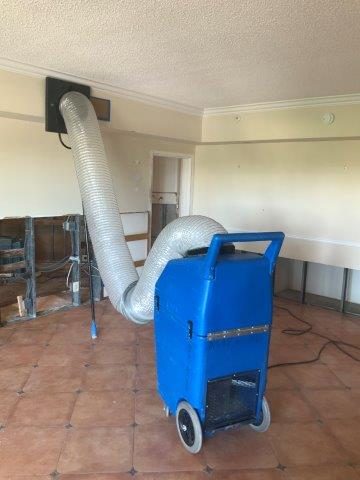
- Containment and Engineering Controls: Proper remediation requires isolation. The contractor should utilize heavy-duty plastic containment zones, negative air pressure machines with HEPA filtration, and HEPA vacuums to prevent mold spores from cross-contaminating unaffected rooms.
The Mold Remediation Process After Water Damage
Flooding introduces category 3 (black) water or category 2 (grey) water into living areas, which accelerates microbial contamination behind baseboards, under flooring, and inside drywall. A professional remediation workflow generally involves several controlled stages:
1. Containment and Air Filtration
Remediators seal off the work area using physical poly-sheeting barriers and place the space under negative air pressure. Continuous HEPA air scrubbers capture airborne spores and particulates throughout the project.
2. Removal of Impacted Porous Materials
Porous items that cannot be salvaged—such as wet drywall, baseboards, insulation, and carpet padding—are carefully bagged inside the containment zone and disposed of according to local regulations.
3. Cleaning and Antimicrobial Application
Structural framing, subfloors, and remaining non-porous surfaces are cleaned using HEPA vacuuming, damp wiping, and EPA-registered antimicrobial treatments to neutralize remaining fungal residues.
4. Structural Drying
Commercial dehumidifiers and air movers dry the remaining framing to target moisture content levels before any reconstruction begins, preventing new growth from developing inside closed wall cavities.
Questions to Ask Before Hiring
Before signing a work authorization or remediation contract, ask the provider these direct questions:
- Can you provide your Florida DBPR license number and proof of pollution liability insurance?
- Will you work directly from an independent assessor’s protocol?
- What specific containment and negative-air procedures will you use to protect the rest of my home?
- Are your technicians certified in water damage restoration and applied microbial remediation?
- Do you guarantee that the space will remain contained until a third-party assessor passes the clearance test?
Frequently Asked Questions
Can a Florida restoration contractor write my mold inspection report?
Generally no. Florida law separates mold assessment from mold remediation. If a company handles your cleanup, they cannot conduct the initial assessment or the final clearance testing for your property.
Why is clearance testing necessary after remediation?
Post-remediation verification (PRV), or clearance testing, provides objective scientific confirmation from an independent assessor that mold spore counts have returned to normal levels before you rebuild walls and finishes.
How quickly does mold develop after a flood in South Florida?
In warm, humid environments, mold can begin germinating on porous, cellulose-rich materials within 24 to 48 hours of water exposure. Rapid drying and professional containment are critical to minimizing structural damage.